Valencia's EMT has approved the awarding of two major projects totalling over 10 million euros: the electrification of Depòsit Nord and the construction of the new Safranar depot, with capacity for 79 buses.
The Board of Directors of the Municipal Transport Company (EMT) of Valencia has given the green light to the awarding proposals for two key projects for fleet modernisation: the electrification of Depòsit Nord and the construction of the new Safranar depot. Both actions total an investment exceeding 10 million euros and mark the transition from planning to execution of the major projects in the 2025-2030 Master Plan.
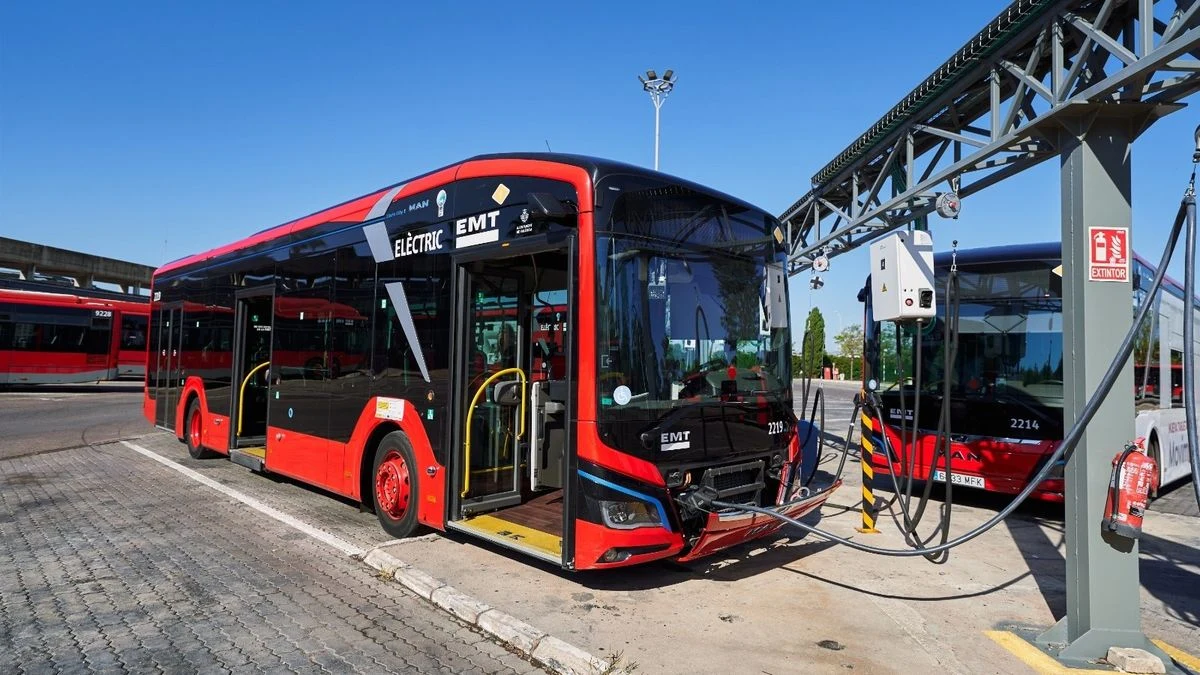
The first of the awards corresponds to the West Phase of the electrification of Depòsit Nord, which has been assigned to the Eiffage Energía-Iberdrola Clientes consortium for a maximum amount of 4.27 million euros. This action will enable the installation of 24 new charging points for electric buses and the incorporation of an intelligent energy management system.
This phase complements the works already underway at the same depot and those carried out in Sant Isidre, as part of a global programme that amounts to around 20 million euros and will ultimately leave 168 charging points for electric buses and multiply the available power at the EMT facilities by six.
The second award, for the construction of the new Safranar depot, has been granted to the TECOPSA-SAV consortium for a maximum amount of 5.88 million euros. This new infrastructure will have the capacity for 79 buses, of which 60 will be articulated, and will include an auxiliary building, facilities prepared for future electrification, photovoltaic panels for self-consumption, and a connecting road to the San Isidro garage.
The construction of this depot will increase parking capacity and respond to the growth of the fleet, which will rise from the current 496 buses to 532 thanks to the incorporation of the 222 new vehicles acquired by the company. It will also facilitate the operation of a fleet with an increasing presence of articulated buses, which are longer and have greater capacity.
The Councillor for Mobility and president of the EMT, Jesús Carbonell, stated that “today we take a fundamental step because we leave behind the planning phase and fully enter the execution phase.” In his opinion, “the projects are already designed, the investments are approved, and now the works begin that will allow the citizens of Valencia to see on the ground the transformation that the EMT is undergoing.”
Carbonell defended that “talking about sustainable mobility without making the necessary investments to make it possible is futile. Sustainable mobility is not achieved with statements or propaganda campaigns, but by building infrastructure, purchasing buses, hiring staff, electrifying facilities, and improving the service that citizens receive.”
The president of the EMT recalled that at the beginning of the legislature they found “a company without space to grow, with an evident shortage of buses and staff, without electrified garages, without capacity to accommodate more fleet, and with lines that needed to be rethought.” Now, he assured, “EMT has a defined roadmap and the necessary investments to reverse that situation.”
These awards are in addition to the acquisition of 222 new buses for 118 million euros, the creation of structural employment pools for drivers and maintenance staff, and other measures to improve the operational capacity of the company. With all this, the EMT expects to offer a service with more buses, greater transport capacity, more staff, and electrified facilities, adapted to the growing demand for public transport in Valencia.
You may also like