The Valencia City Council is finalising the museographic setup of the Casa dels Bous, the future home of the Museu de la Mar, which will open its doors in September. The work, awarded in May for €151,249.94, includes the rehabilitation of the archaeological remains of Tenyidors.
The future Museu de la Mar in Valencia, located in the historic Casa dels Bous in the El Cabanyal-El Canyamelar neighbourhood, will open next September. The Valencia City Council is currently accelerating the setup of the permanent exhibition and the museographic adaptation of the building, after completing the rehabilitation of the archaeological remains of Tenyidors and cleaning the material recovered from an old shipbuilding workshop in the area.
The work was awarded in May 2025 to the specialised company Cultural Media Design, S.L., for an amount of €151,249.94, funded by Next Generation European funds. According to the Councillor for Cultural Action, Heritage and Cultural Resources, José Luis Moreno, the museum will allow visitors to learn about the culture of El Cabanyal-El Canyamelar and immerse themselves in its fishing tradition.
The exhibition space will cover the origins of bou fishing, the most representative trades and vessels, the dyeing of nets, the evolution of the port of Valencia, and the connection of the Poblats Marítims with fishing activity. The opening will mark a milestone for the neighbourhood, which has long been calling for a space to interpret its history and cultural identity.
The Casa dels Bous was built between 1877 and 1895 by the Marina Auxiliante society to house the oxen used to launch and beach vessels and the nets employed in trawling. The building, in a historicist style, is one of the few examples of maritime industrial architecture that remain in the city.
The museum's exhibition spaces will mainly consist of three: the ground floor and the first floor of the historic building and the Tenyidors cottages. Access will be through the courtyard, leading to the main door. In the entrance hall, to the left is the staircase leading to the first floor, intended for temporary exhibitions, with stairs and a lift; to the right, the reception desk; and straight ahead, the stable area.
The stable area consists of three distinct spaces: in the centre, the largest area, measuring 18 metres long by six wide, and on each side, a portico of four pillars that delineated the old stables. The first five areas of the museographic content will be developed in these spaces.
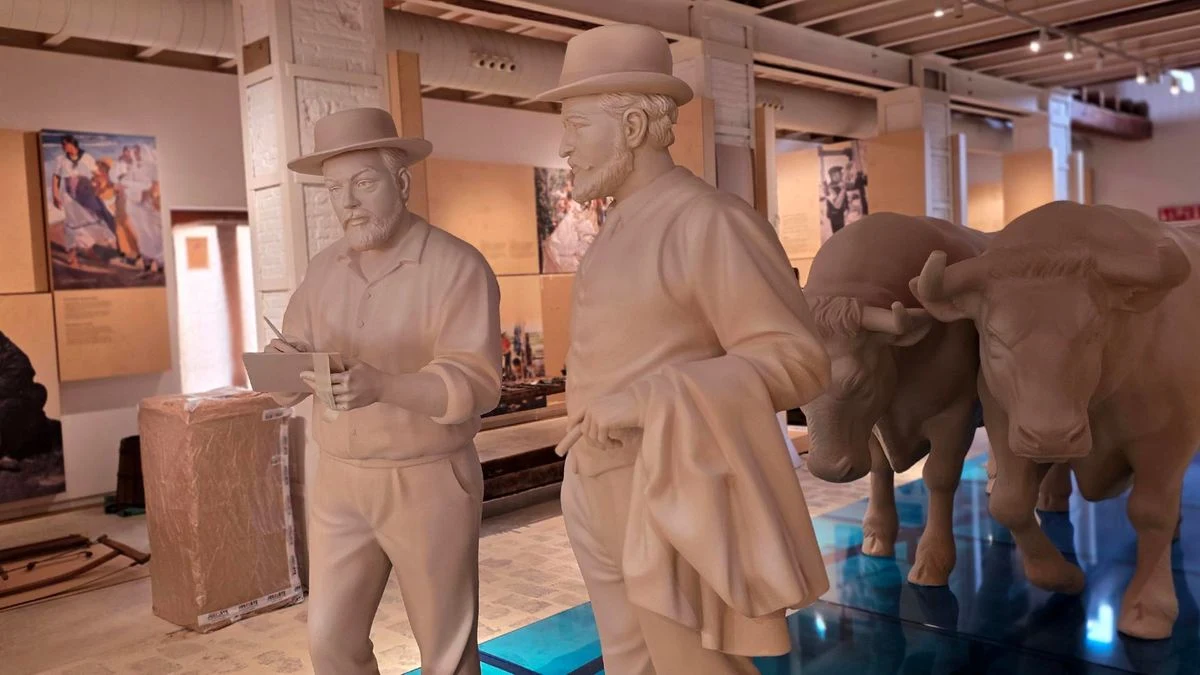
A large platform will be installed in the central nave where a llaüt, a traditional Mediterranean vessel, will be displayed, accompanied by fishing gear and related objects. The scene will be completed with life-size reproductions of two oxen, of the painter Joaquín Sorolla and the writer Vicente Blasco Ibáñez, as the main figures.
The choice of Sorolla and Blasco Ibáñez is not coincidental: both were frequent visitors to the neighbourhood and reflected the maritime life of El Cabanyal in their works. Sorolla, with his beach and fisherman scenes, and Blasco Ibáñez, with novels like Flor de mayo, set in the neighbourhood.
The rehabilitation of the archaeological remains of Tenyidors, an old shipbuilding workshop, has been key to recovering part of the neighbourhood's heritage. The work has included cleaning the recovered material, which will now be part of the exhibition.
The Museu de la Mar adds to Valencia's cultural offerings, which in recent years has promoted the recovery of heritage spaces in the Poblats Marítims. The opening is scheduled for September, although the City Council has not specified the exact date.
With the opening of the museum, El Cabanyal-El Canyamelar will have a long-awaited space to interpret its history and cultural identity. Additionally, it will become a new meeting point for residents and a tourist attraction for those wishing to learn about the city's fishing tradition.
The project is funded by Next Generation European funds, as part of the aid for the recovery of cultural heritage. The awarded company, Cultural Media Design, has experience in museographic projects and has been responsible for developing the exhibition design.
The Casa dels Bous, declared a Local Relevance Asset, is a unique building that has survived the passage of time. Its rehabilitation has respected the original structure, preserving the stables and the central nave, which are now adapted for museum use.
The museum will offer an educational journey through the history of bou fishing, a traditional trawling technique that gave the building its name. Visitors will learn how nets were dyed, which vessels were the most representative, and how the port of Valencia evolved over the centuries.
The opening of the Museu de la Mar is good news for the neighbourhood, which has seen a cultural and tourist revitalisation in recent years. With this new facility, Valencia reinforces its commitment to preserving its maritime heritage and disseminating its history.
The City Council has confirmed that access to the museum will be free during its first days of opening, as is customary in such cases, although it has not detailed the hours or final rates. It is recommended to keep an eye on official channels for updates.
The museographic adaptation has been made possible thanks to the collaboration between the Delegation of Cultural Action, Heritage and Cultural Resources and the specialised company. The work has also included the installation of appropriate lighting and climate control systems for the conservation of the pieces.
The Museu de la Mar will become a reference point for understanding Valencia's relationship with the sea, a history that has shaped the identity of neighbourhoods like El Cabanyal. With its opening, the city gains a first-class educational and tourist space.
The opening date, scheduled for September, will depend on the completion of the setup work, which is progressing well. The City Council has assured that everything possible is being done to meet the deadlines and that the museum can open its doors in early autumn.
Meanwhile, the residents of El Cabanyal-El Canyamelar await the opening of a space they have been requesting for years with anticipation. The museum will not only be a place of memory but also an engine of economic and cultural activity for the neighbourhood.
The Casa dels Bous, with its unique architecture and its history linked to fishing, is the perfect setting to house this museum. Its rehabilitation has been a complex process, but the result promises to be a unique space in Valencia.
The project of the Museu de la Mar is an example of how the recovery of heritage can go hand in hand with cultural and tourist dynamism. With the opening in September, Valencia adds a new attraction to its museum offerings.
For more information, interested parties can consult the Valencia City Council website or the social media of the Delegation of Cultural Action.
You may also like