The works of the Grau cycle-pedestrian pathway are progressing in Valencia. A 54-metre footbridge will cross the Túria without intermediate supports to span the riverbed and complete the green corridor to the sea.
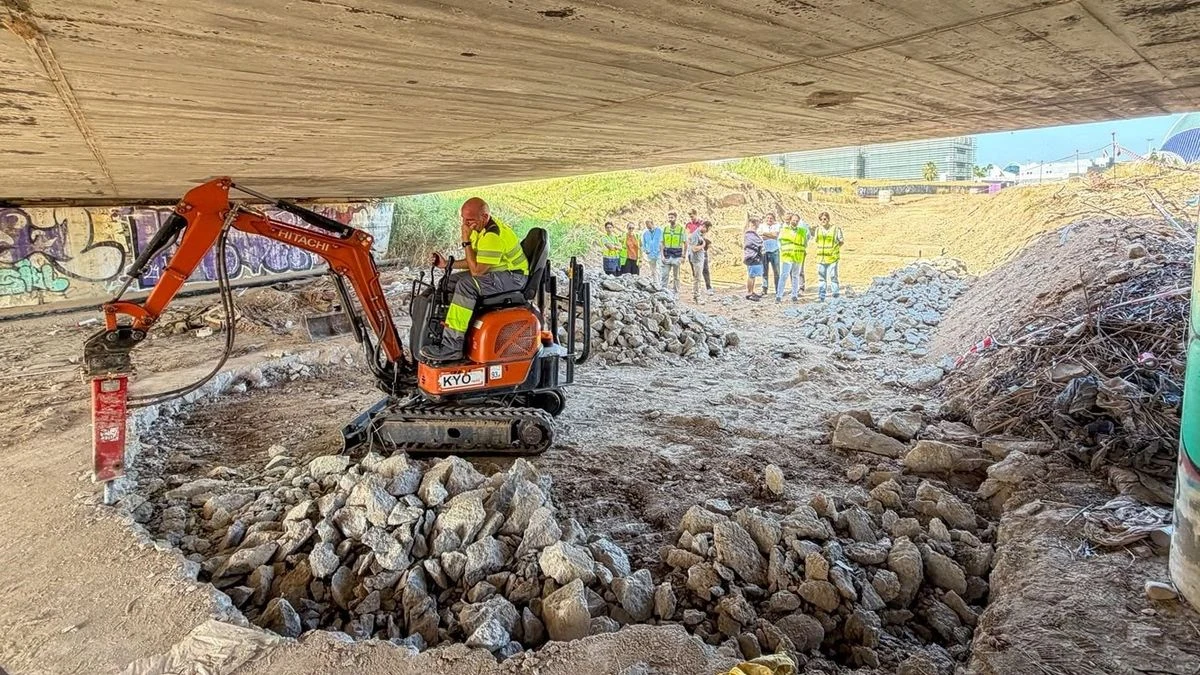
The councillor for Urbanism in Valencia, Juan Giner, supervised the progress of the Grau cycle-pedestrian pathway works on Monday, an infrastructure that will connect the districts of Poblats Marítims, Camins al Grau, and Quatre Carreres with the city's seafront. The project, which has been underway since June 15, will complete the route of the Jardín del Túria in its final stretch, linking the area around the Oceanogràfic with the Pont de les Drassanes.
The most distinctive element of the project is a 54-metre metal footbridge that will cross the old riverbed without intermediate supports to avoid affecting its hydraulic capacity. According to Giner, the footbridge is currently being manufactured, and its installation, scheduled for the end of the year, will take approximately two months.
The design is based on a specific hydraulic study: the deck is positioned above the water level of a 500-year flood event, with half a metre of clearance, and of a 100-year event with an additional metre. This ensures safety against potential floods.
The route will have an approximate length of 1.3 kilometres and a variable width of between 3 and nearly 6 metres, designed as a shared path with pedestrian priority. The route will cross the riverbed via the new footbridge and continue along the right bank, passing under the Serradora railway bridge through an underpass that will be adapted to improve accessibility.
At the pumping station of Cantarranas, the two routes will separate: the cyclist route will follow L'Estacioneta street, and the pedestrian route will run along the riverbank, circling the west side of the Pont de les Drassanes. In the areas yet to be developed, stabilised earth surfaces will be used to reduce the impact of the project.
The project includes three rest areas with benches every 50 metres, energy-efficient public lighting with presence sensors, trees and low-maintenance vegetation (hackberries, thyme, chamomile, and rosemary), urban furniture, bike racks, drinking fountains, and video surveillance. The access ramps to the footbridge meet universal accessibility criteria.
The work is being carried out by the company Orthem Servicios y Actuaciones Ambientales and has an associated investment of 1.8 million euros, co-financed by the Valencia City Council and the Generalitat as part of the European Green Capital 2024 initiative. Giner emphasised that this pathway is “a historic demand from the local residents” and highlighted that it “completes the great green axis of the Túria to the sea and improves sustainable connectivity between the southern and maritime neighbourhoods.”
You may also like