The Ontinyent Textile Museum has closed the exhibition ‘Luis Vidal Corella. Photographic Chronicle of the Postwar in Valencia’ after weeks of high attendance, with all guided tours fully booked. The exhibition has particularly attracted older visitors and families.
The Textile Museum of the Valencian Community in Ontinyent has shut its doors on the exhibition ‘Luis Vidal Corella. Photographic Chronicle of the Postwar in Valencia’ after several weeks during which the exhibition has seen notable interest from the public and visitors. The initiative, promoted by the Democratic Memory delegation of the Valencia Provincial Council coordinated by the first vice president Natàlia Enguix, has stood out for bringing contemporary Valencian history closer to audiences of different ages.
The councillor for Tourism and Museums of the Ontinyent City Council, Mª José Alhambra, has positively assessed the reception: “we are very satisfied with the response”, she noted, emphasising that the exhibition has succeeded in attracting different generations to the museum to discover a fundamental part of local history. “We have seen how it sparked the interest of older people who recognised in the images an era that is part of their memory, but also families with children who found in these photographs a way to connect with a historical period that often feels distant from new generations,” she added.
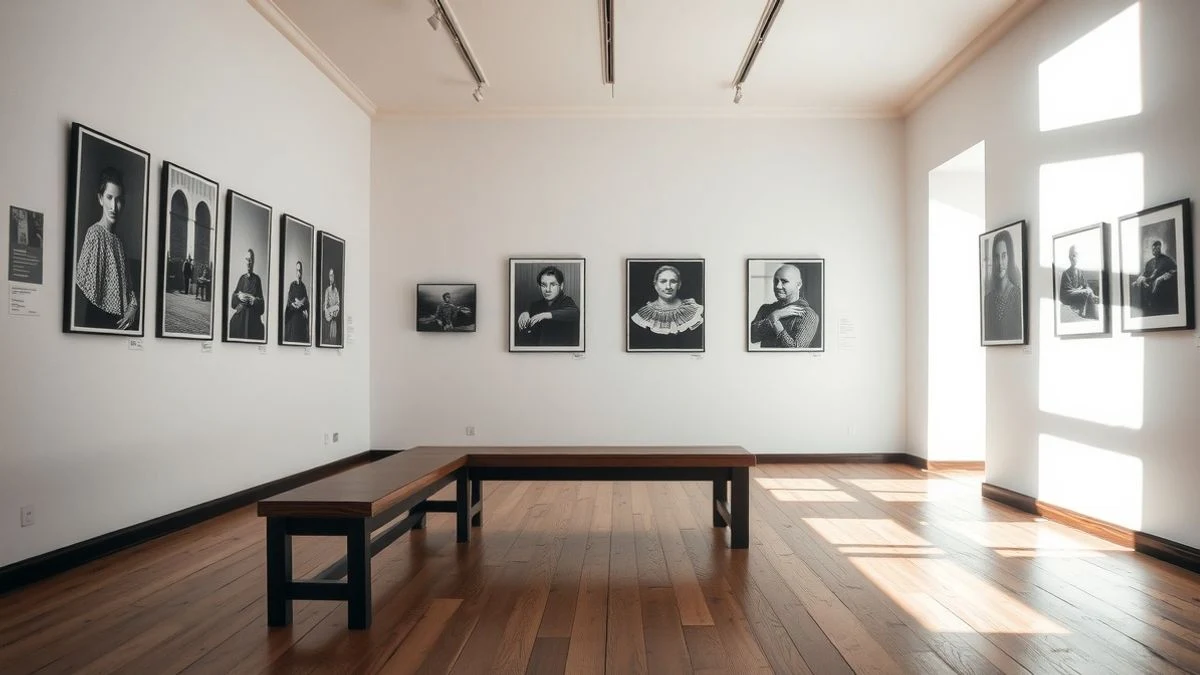
The exhibition featured nearly 200 photographs, around 80 of which were unpublished, and allowed visitors to discover the work of one of the great names in Valencian photojournalism of the 20th century. Curated by Ester Medán and Luis Vidal Ayala, the grandson of the photojournalist, the exhibition covered the life and professional trajectory of Luis Vidal Corella with images taken between 1914 and 1959. Through them, the public could approach moments such as the proclamation of the Second Republic, the Civil War, Francoist repression, and the postwar period, as well as various aspects of the everyday life of Valencian society.
Among the complementary activities, a cycle of twelve guided tours stood out, with six sessions specifically for educational centres and six more aimed at family audiences during May and June. The weekend visits received particularly positive feedback, with all sessions completely full. Additionally, the programme included the cycle ‘Literary Encounters with Memory’, organised by the Councils of Museums and Democratic Memory with the support of the Valencia Provincial Council, which brought to the museum the presentation of three books related to the Civil War, the postwar period, and the recovery of democratic memory.
The cycle began with the presentation of ‘No estaba escrito’, by Ana Villanueva, which recounts the experiences of her grandfather and great-uncle during the Civil War and subsequent exile. The second proposal was ‘Más allá del silencio. Historia de una amistad inesperada’, by José Cabida, which reconstructs a true story featuring Antonio Cabida Soriano, captain and political commissioner of the Second Republic, and José Simó Aynat, the local leader of Falange in Ontinyent. Finally, the cycle concluded with the presentation of ‘Guerra y amor, esperanza y frustración. Memorias en la España de la Guerra Civil’, by Ricardo Camallonga and Carlos Tormo, a work based on the war diary of the Valencian combatant Ricardo Camallonga.
These activities were complemented by other proposals related to the context of the exhibition, such as the screening in the cinema halls of the El Teler Shopping Centre of the film ‘La invasió dels bàrbars’, by director Vicent Monsonís, a work that bases some scenes on photographs by Luis Vidal Corella. The exhibition, which arrived in Ontinyent after being initially displayed at the Valencian Museum of Illustration and Modernity of the Provincial Council, will now continue its tour through the Valencian regions.
The closure of this exhibition marks a new milestone in the cultural programming of Ontinyent, which has successfully combined historical dissemination with citizen participation. The interest generated demonstrates the relevance of photography as a tool for understanding the past and brings residents closer to a crucial stage in the recent history of the Valencian Community.
For those who could not visit it, the exhibition's tour through other Valencian towns will offer new opportunities to view these images. The next stop has not yet been officially announced, but it is expected that the schedule of venues will be revealed in the coming months.
You may also like